

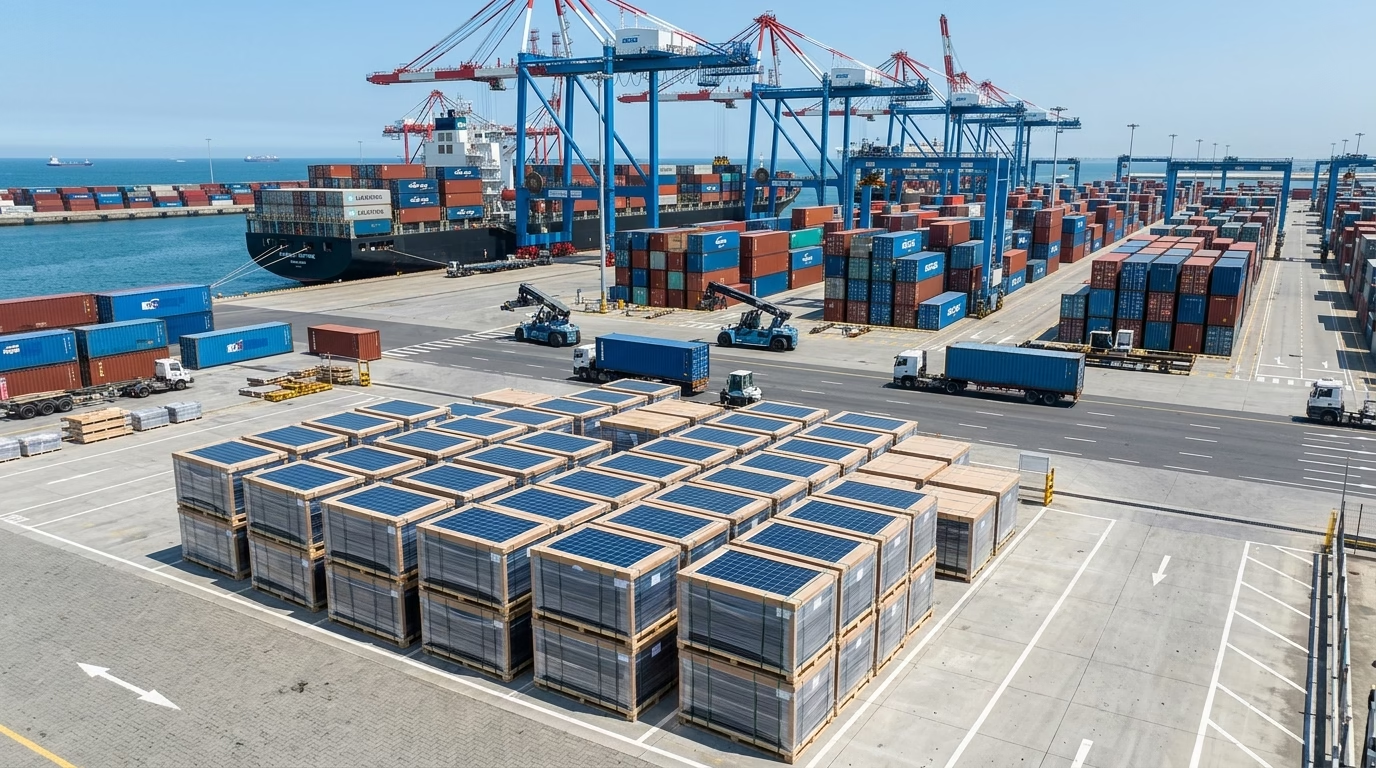
Importing renewable energy equipment is one of the most critical sectors in Pakistan today. However, navigating the solar panel clearance procedure in Pakistan requires an understanding of the latest Federal Board of Revenue (FBR) regulations, duty structures, and the digital Pakistan Single Window (PSW) system.
Whether you are a commercial importer or setting up a large-scale industrial project, this comprehensive guide provides everything you need to know to ensure a smooth, penalty-free customs clearance process.

1. Current Tax and Duty Status (2024–2026)
The tax landscape for renewable energy components is subject to change based on the annual Finance Act and various FBR Statutory Regulatory Orders (SROs). Here is the current status:
Solar Panels (PV Modules)
- Customs Duty: Solar panels (HS Code 8541.4000) generally enjoy a 0% customs duty exemption, supported by the government’s push for alternative energy.
- Sales Tax (GST): As of the latest fiscal updates (effective July 2025), a 10% General Sales Tax (GST) is applied to imported solar panels. It is crucial to account for this in your landed cost calculations.
Related Solar Equipment
It is a common misconception that all solar equipment is duty-free. Other components face different tariff structures:
– Inverters: Depending on specifications, inverters can attract 5–10% import duties.
– Solar Batteries (Lithium/Lead-Acid): Typically carry import duties ranging from 10–15%.
– Mounting Structures: Steel and aluminum structures, along with specialized cabling, often face standard customs rates of 10–20% or more.
Always verify your specific HS Codes with the FBR or your customs clearing agent before shipment to avoid unexpected demurrage costs.
2. Essential Documentation for Clearance
To clear your goods efficiently through Pakistan Customs via the PSW portal, you must prepare a comprehensive documentation packet:
| Document | Purpose |
|---|---|
| Commercial Invoice | Details the exact value, quantity, and specifications of the solar panels. |
| Packing List | Provides a breakdown of how the shipment is packed and palletized. |
| Bill of Lading (B/L) | The official shipping document provided by your freight forwarder. |
| Certificate of Origin | Proof of the manufacturing country to claim any specific trade agreement benefits. |
| Type Test / Conformity Certificate | Verifies that the panels meet international and local quality standards. |
| PSQCA Certification | Compliance with the Pakistan Standards and Quality Control Authority (critical for avoiding Red Channel delays). |
3. The Customs Clearance Process via PSW
The legacy WeBOC system has been largely integrated into the Pakistan Single Window (PSW), digitizing and streamlining the workflow.

Step 1: PSW Registration
Before importing, your business must be registered with the SECP, have a valid Import License, and hold an active subscription to the PSW portal.
Step 2: Filing the Goods Declaration (GD)
Your licensed customs agent will log into the PSW system and file the Goods Declaration (GD) on your behalf, attaching all digitized documentation.
Step 3: Channel Assignment
Once the GD is submitted, the risk management system automatically assigns the shipment to one of three channels:
– Green Channel: Automatic release with minimal document verification. Reserved for highly compliant, established importers.
– Yellow Channel: Requires manual documentary verification by a customs officer to check valuations and HS codes.
– Red Channel: Requires both documentary review and physical examination of the container at the port. New importers are frequently routed here.
Step 4: Duty Payment & Release
If taxes (like the 10% GST) are applicable, a Payment Slip ID (PSID) is generated. Once paid electronically, Customs issues the “Out of Charge” order, allowing your transport to lift the container from the port.
4. Frequently Asked Questions
1. Are solar panels completely tax-free in Pakistan?
While solar panels (PV modules) enjoy a 0% customs duty, a 10% General Sales Tax (GST) has been applicable since July 2025. Other components like batteries and inverters are subject to standard import duties.
2. Can I import solar panels for personal use without a clearing agent?
While theoretically possible for very small quantities, it is highly discouraged. The complexities of the PSW system, HS code classification, and PSQCA compliance make a professional clearing agent essential to avoid massive demurrage fees.
3. What is the correct HS Code for solar panels?
The standard HS code for Photovoltaic (PV) modules is 8541.4000. However, always verify this with the current FBR tariff schedule, as misclassification leads to heavy penalties.
4. How long does the clearance process take?
If all documents are perfect and the shipment hits the Green Channel, clearance can take 24–48 hours. If routed to the Red Channel for physical inspection, it may take 5–10 days.
5. Do I need PSQCA approval for solar panels?
Yes. The Pakistan Standards and Quality Control Authority (PSQCA) mandates quality standards for solar imports to prevent substandard equipment from entering the grid.
6. What happens if I declare a lower value on the invoice?
Customs uses Valuation Rulings to determine the minimum acceptable price per watt. If you declare below this ruling, customs will reject your invoice value, apply the ruling value, and may issue penalties for under-invoicing.
7. Is WeBOC still used for clearance?
WeBOC functions have been integrated into the newer Pakistan Single Window (PSW) system, which now serves as the primary portal for all trade-related declarations.
8. Do I need an AEDB certificate?
For commercial imports, registration and compliance with the Alternative Energy Development Board (AEDB) guidelines are often required to ensure grid compatibility and safety.
9. What are demurrage charges?
Demurrage is a penalty fee charged by the port/terminal per day if your container is not cleared and removed within the free time (usually 5 days). This is why having documents ready *before* arrival is critical.
10. Can I claim the 10% GST back?
If you are a registered commercial importer or manufacturer, you may be able to adjust the paid import GST against your output sales tax on your monthly FBR returns. Consult your tax advisor.
Need Expert Assistance?
Navigating the Pakistan Single Window, ensuring accurate HS code classification, and managing port logistics can be overwhelming. Don’t risk expensive demurrage fees or customs penalties.
Let the experts at Bahri Trading Corporation handle your renewable energy logistics from port to project site.
Contact our experts on WhatsApp today at +92 331 3311226 for professional Customs Clearance and Freight Forwarding services!